Audible noise is evidence to investigate, but fault location depends on whether the sound tracks speed, torque or the machine structure.
Helical Gearbox Noise Diagnosis by Speed and Load
read more

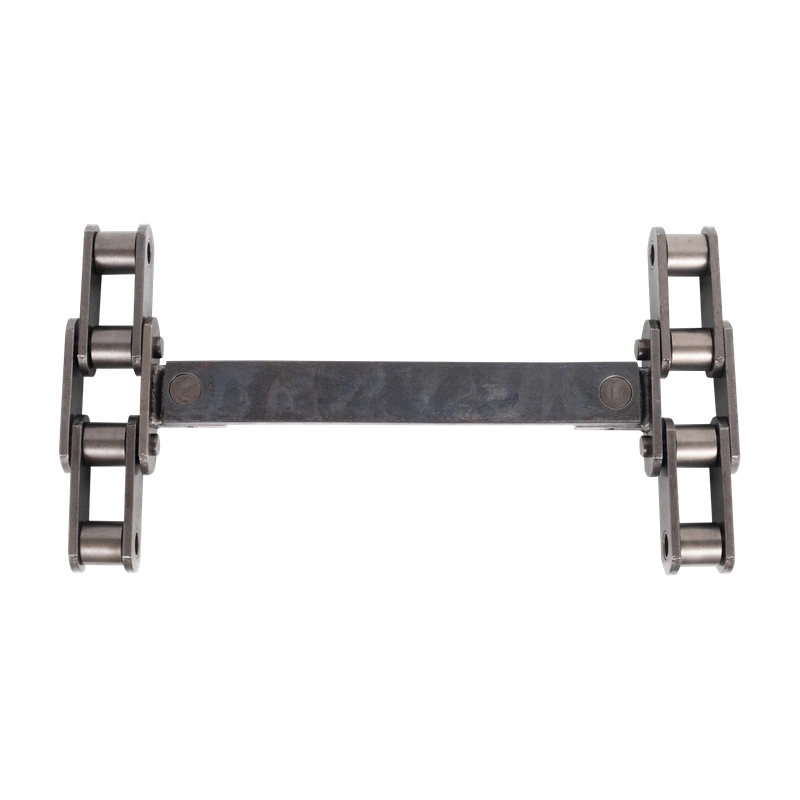
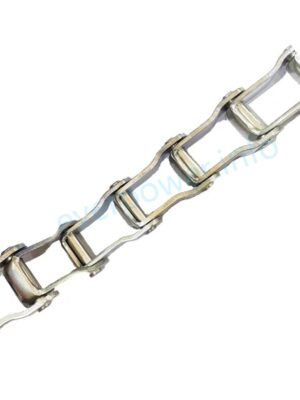
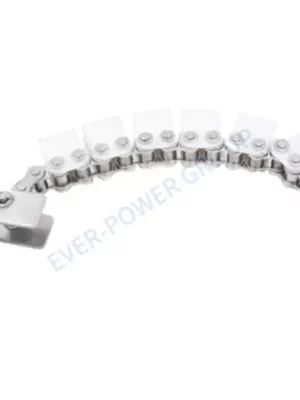
A precisely specified 78mm asphalt paver conveyor chain for restoration of the original pitch and scraper fit. Avoid confusion with 75mm and 80mm families.
MOQ: flexible. Minimum order value USD 1,500; mixed orders and trial quantities available.
A chain removed from an older asphalt paver may be labeled by a mechanic as "about 80mm" even though its intended pitch is 78mm. EP-CHG78E exists for that exact 78mm dimensional requirement. Its resemblance to nearby families makes identification a measurement problem rather than a visual purchasing exercise. Buyers should avoid selecting a new chain from a broad nominal-size filter until the pitch has been established from sound evidence.
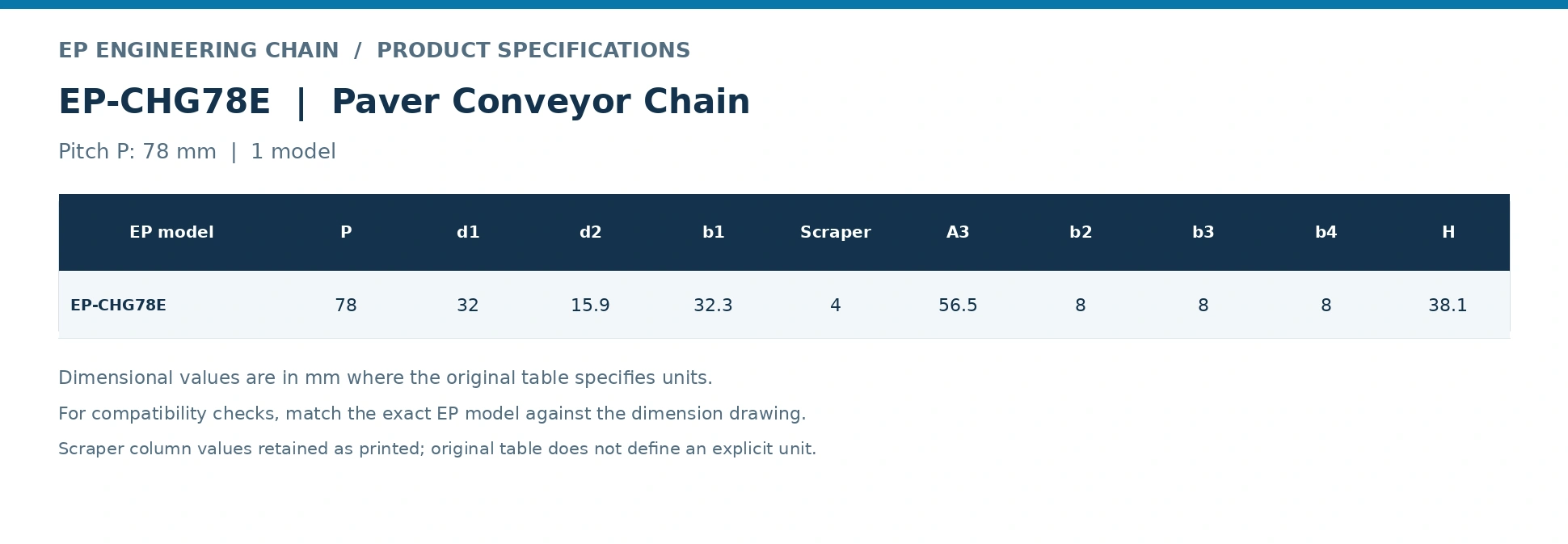
The documented EP-CHG78E combines a 32mm roller, 15.9mm pin, 32.3mm inner-plate width, 56.5mm A3 offset and 38.1mm plate height. The listed b2, b3 and b4 dimensions are 8mm each. For a worn or unknown machine assembly, those values form a distinctive second-stage fingerprint after pitch verification.
Exact pitch
78 mm
Pin
15.9 mm
Complete model dimensions
| EP Model | Pitch P (mm) | Roller d1 (mm) | Pin d2 (mm) | Inner width b1 (mm) | Scraper* | Offset A3 (mm) | Inner plate b2 (mm) | Outer plate b3 (mm) | Outer plate b4 (mm) | Plate height H (mm) |
|---|---|---|---|---|---|---|---|---|---|---|
| EP-CHG78E | 78 | 32 | 15.9 | 32.3 | 4 | 56.5 | 8 | 8 | 8 | 38.1 |
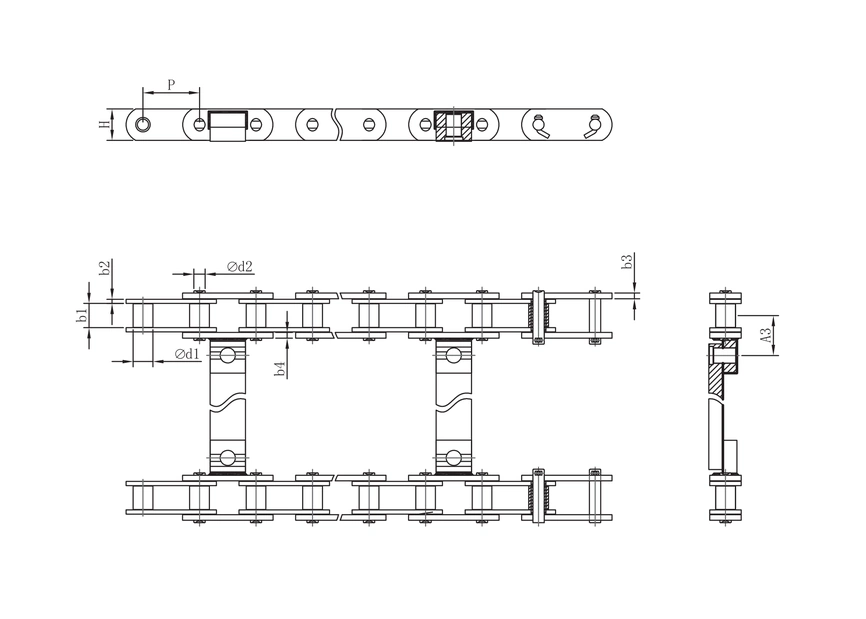
Scraper = 4 is a printed source value. It should not be interpreted as a machine-specific number of attachments without a confirmed layout.
An exact-pitch identification can be supported by browsing the wider industrial chain range.
Where a chain has been heavily used, the measured distance across individual pin centers may have drifted from its original value. Use a straight and adequately long segment, collect more than one interval and photograph the caliper or measuring rule at the chosen reference points. Record the interval count so the reported pitch can be checked independently by an engineer.
A result near 78mm should not immediately be rounded up to 80mm, and a short distorted sample should not be used as sole evidence. Look for any surviving code, a machine drawing, a replacement order record or a sprocket dimension. If the evidence conflicts, show the conflicting measurements rather than averaging incompatible facts into an invented specification.
The EP-CHG75E, EP-CHG78E and EP-CHG80 families occupy a nearby nominal range but represent separate product identities. In particular, EP-CHG75E and EP-CHG78E share a number of roller and plate dimensions despite the 3mm pitch difference. Some EP-CHG80 versions depart much further in roller, pin and plate geometry. A purchasing team can therefore be misled by a familiar roller size even when the required drive spacing is not correct.
The right comparison starts with the measured original pitch and confirms the sprocket engagement. Only then should the width, attachment offset and plate envelope be inspected. Create a measurement record that notes which dimensions were established from a drawing and which were taken from a used part. This prevents the replacement decision from losing its evidence trail.
Do not infer the original pitch from a 32mm roller. Record measured pin-center distances and compare all relevant dimensions before authorizing replacement.
The source specifies a Scraper entry of 4 for EP-CHG78E, alongside A3 = 56.5mm. The Scraper column should be carried through the model record as published, without inventing its unprovided definition. If a finished assembly depends on the scraper interval, crossbar frequency or special attachment position, the buyer and supplier should confirm those conditions from a full assembly drawing.
Inspect how the scraper traverses the conveyor and whether the attachment or plate meets other machine components at the turn-around points. A chain that is dimensionally sound at its straight section may still have insufficient running clearance at the ends. Clearance review should include rotation and the machine state in which the most restrictive geometry occurs.
Repeated changes in roller contact from tooth to tooth may suggest pitch or sprocket incompatibility, but lubrication, alignment and wear can produce overlapping symptoms. Record the symptom, where it occurs, and whether it appears under hand rotation or only during operation. This is more useful to a replacement specialist than describing a chain merely as noisy or unreliable.
Observe whether the drive and idler sprockets share a consistent wear pattern. If a new chain is installed against badly worn tooth profiles, the resulting motion may conceal the actual quality of the new chain. The ordering decision should therefore include the surrounding drivetrain condition, not only the bare chain specification.
For an original 78mm chain, tooth-pocket measurements must agree with candidate sprocket constructions; verify the tooth geometry and local mounting arrangement from the actual machine rather than assuming a catalogue match.
A complete EP-CHG78E enquiry records P = 78mm, the 32mm roller and 15.9mm pin, b1, A3, b2/b3/b4 and H. Add photos of the existing scraper connection and sprocket. Include whether the part is intended for a left-hand run, right-hand run or a synchronized pair.
A knowledgeable buyer may also provide the available installation envelope, the original number of links and the conveyor operating conditions. These observations are not substitute catalogue dimensions, but they help decide whether the published design can be used as specified or must be reviewed as a custom assembly.
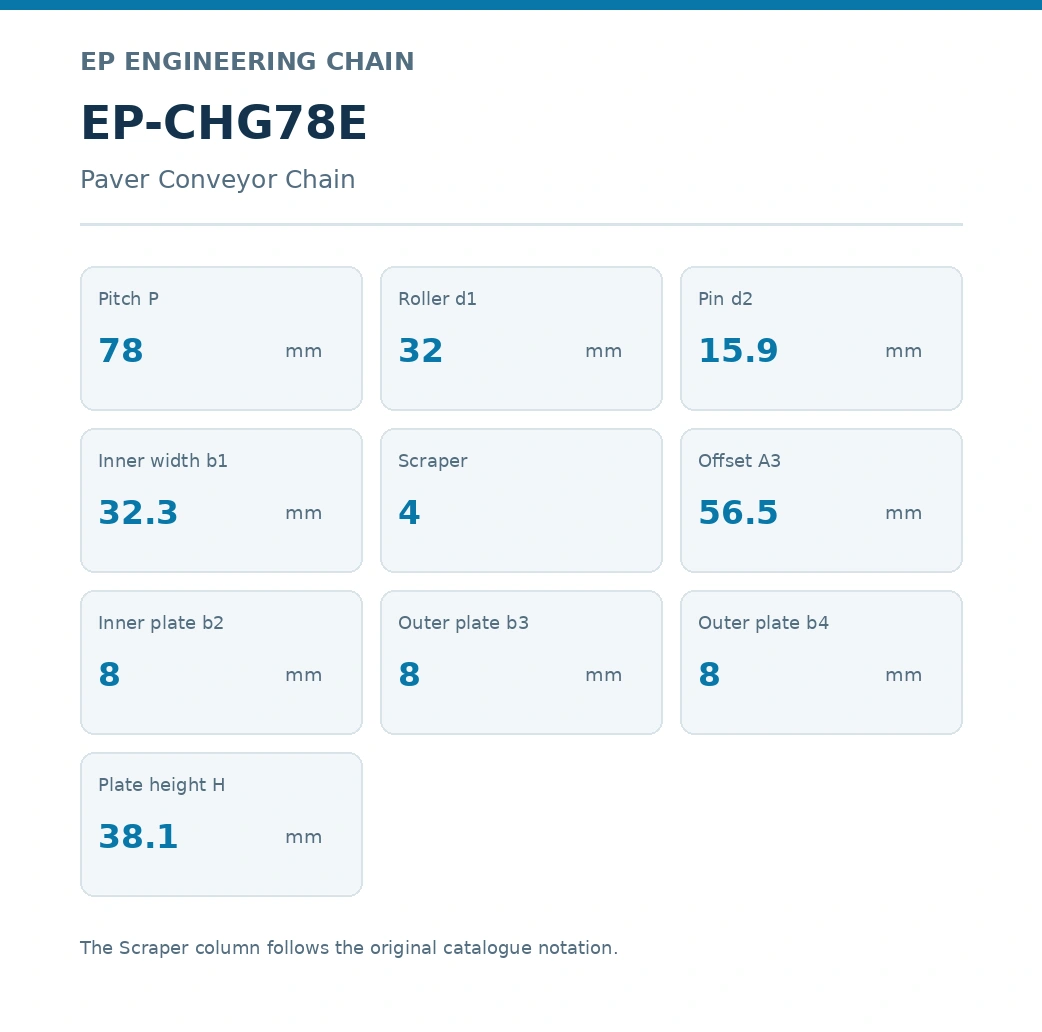
The most important listed distinction is pitch: 78mm for EP-CHG78E versus 75mm for EP-CHG75E. The printed Scraper entries also differ, while several other dimensions match. That combination requires an explicit sprocket and attachment review.
Wear at pins and bushes can add clearance across successive links. A short or bent section may distort the result. Use several intervals and corroborate with original equipment records or a sound specimen.
The catalogue lists H = 38.1mm. Its A3 is 56.5mm, and each of b2, b3 and b4 is 8mm. These figures should be read in the supplied drawing before making an attachment.
Order quantity is discussed according to the requested supply scope. Where suitable, an initial 1-5-piece sample request is possible; 1-2 pieces may have an increased unit cost. Different models may be consolidated against an approximate USD 1,500 minimum order value.
Allow indicative 10-25 working days for standard parts, 20-45 for custom components and 45-120 for project-scale equipment. Typical trade terms are EXW, FOB, CIF or DAP; FCA, CFR, CPT, CIP and DDP remain subject to agreement. The actual due date is confirmed with the order.
If your removed chain resembles a 75mm or 80mm design, send multiple-pitch measurements instead of an approximate code. Ever Power can review the evidence for an accurately specified 78mm replacement.
Confirm The Original 78mm Chain Pitch
Audible noise is evidence to investigate, but fault location depends on whether the sound tracks speed, torque or the machine structure.
Flexible couplings accommodate limited relative movement, but poor shaft alignment still affects bearings and seals.
Oil observed on a housing may have traveled from a vent, joint or shaft seal; finding the first wet point is essential.