
Introduction
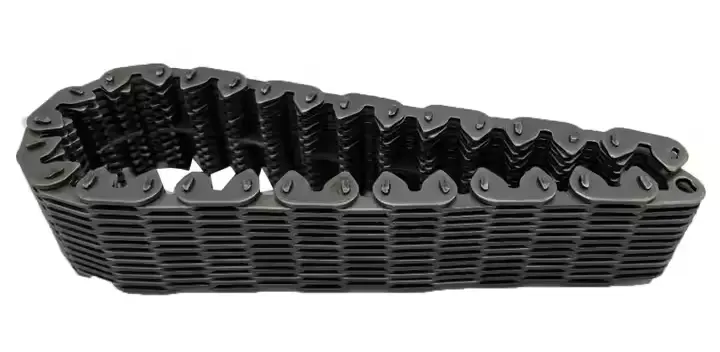
Silent chains, also known as inverted tooth chains, are an essential component in many industrial applications. They provide smooth and efficient power transmission, reducing noise and vibration levels. Understanding the differences between standard and heavy-duty silent chains is crucial for selecting the right chain for specific requirements.
1. Construction
Standard Silent Chains
Standard silent chains are typically made of high-quality alloy steel. They consist of alternating links with specially designed teeth that engage with the sprocket, ensuring precise and reliable power transmission.
Heavy-Duty Silent Chains
Heavy-duty silent chains are designed for applications requiring higher load-carrying capacity. They feature enhanced construction, including thicker side plates and larger pins, to withstand heavy loads and provide increased durability.
2. Load Capacity
Standard Silent Chains
Standard silent chains have a moderate load-carrying capacity suitable for most industrial applications. They offer a balance between performance and cost-effectiveness.
Heavy-Duty Silent Chains
Heavy-duty silent chains are specifically engineered to handle heavy loads. They are commonly used in industries such as mining, construction, and agriculture, where robust chain performance is essential.
3. Applications
Standard Silent Chains
Standard silent chains find applications in various industries, including automotive, packaging, and general machinery. They are well-suited for power transmission in medium-load scenarios.
Heavy-Duty Silent Chains
Heavy-duty silent chains excel in demanding environments, such as heavy machinery, conveyors, and high-torque power transmission systems. They deliver reliable performance under extreme conditions.
4. Sprockets for Silent Chains
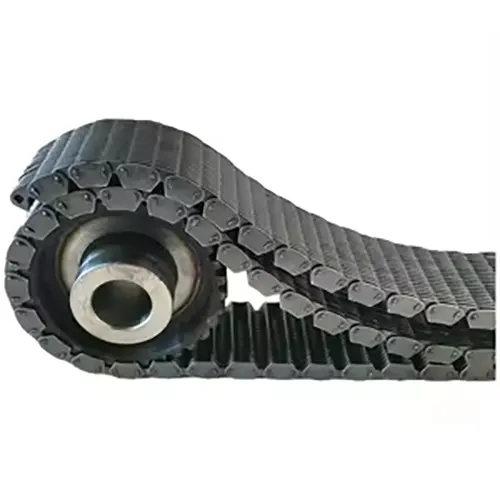
Sprockets play a crucial role in silent chain systems. They engage with the teeth of the chains, ensuring smooth and efficient power transmission.
Silent Chain Sprocket
The silent chain sprocket is specifically designed to match the tooth profile of the silent chain. It ensures accurate engagement and minimizes wear, resulting in reliable and silent operation.
Inverted Tooth Chains
Inverted tooth chains, also known as silent chains, require compatible sprockets to function optimally. The sprockets' tooth profile must precisely match the chain's tooth shape to provide efficient power transmission.
About Us
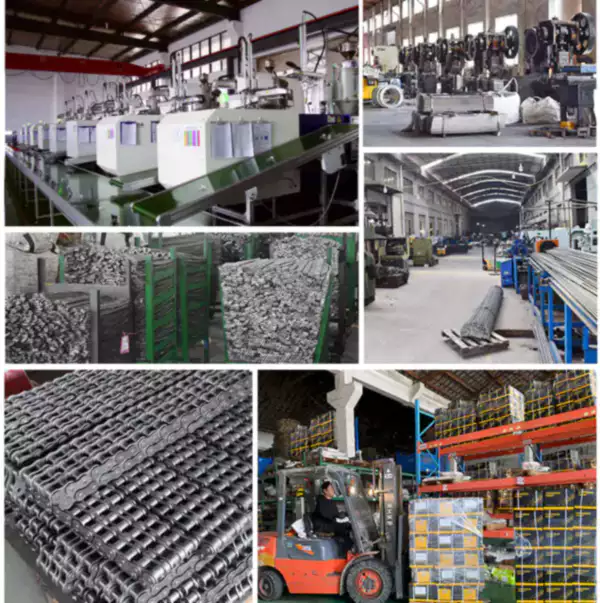
RP Techniek BV, the Dutch sales agent of the Ever-power Group, is a leading supplier of silent chains. We provide high-quality products to more than 90% of our customers in the United States, Canada, Japan, South Korea, Brazil, and Australia. Our commitment is to offer competitive prices and excellent service.
Q&A
Q1: Are silent chains suitable for high-speed applications?
A1: While silent chains are known for their quiet operation, they are not recommended for high-speed applications due to the potential for increased wear and reduced efficiency.
Q2: Can heavy-duty silent chains be used in place of standard silent chains?
A2: Heavy-duty silent chains can be used as a replacement for standard silent chains when higher load capacity is required. However, it is essential to consider the space limitations and compatibility with existing sprockets.
Q3: What lubrication is recommended for silent chains?
A3: It is recommended to use a high-quality lubricant specifically designed for silent chains. Regular lubrication helps reduce friction, wear, and noise, extending the chain's service life.
Q4: Can silent chains be used in corrosive environments?
A4: Standard silent chains are not suitable for corrosive environments. However, there are corrosion-resistant options available, such as chains with special coatings or made from stainless steel.
Q5: How often should silent chains be inspected for wear?
A5: Regular visual inspections should be conducted to check for signs of wear, such as elongation or damaged links. The frequency of inspections depends on the operating conditions but should be performed at least every six months.
Edited by: Zqq.