
Introduction
Inverted tooth chains are widely used in various industrial applications, including machine tools, printing presses, and packaging machines. They are known for their high load capacity, smooth operation, and low noise. However, in order to ensure optimal performance and safety, it is essential to calculate the load capacity of the chain. In this article, we will discuss how to calculate the load capacity of inverted tooth chains.
What are Inverted Tooth Chains?
Inverted tooth chains are a type of silent chain that consists of a series of tooth-like links. Unlike traditional roller chains, inverted tooth chains have a tooth profile that engages with the sprocket teeth. This design provides a smooth and quiet operation, as well as a high load capacity.
Calculating the Load Capacity of Inverted Tooth Chains
To calculate the load capacity of an inverted tooth chain, you need to consider several factors, including the chain pitch, the number of teeth on the sprocket, the chain speed, and the applied load. The load capacity of the chain can be calculated using the following formula:
Load capacity = (Chain pitch x Sprocket tooth number x Chain speed x Tensile strength)/(3.81 x 1000)
Where:
– Chain pitch: the distance between the centers of two adjacent teeth
– Sprocket tooth number: the number of teeth on the sprocket
– Chain speed: the speed at which the chain is moving
– Tensile strength: the maximum load that the chain can withstand without breaking
Factors Affecting the Load Capacity of Inverted Tooth Chains
Several factors can affect the load capacity of inverted tooth chains, including the chain material, the lubrication, the chain tension, and the ambient temperature.
Chain Material
The material used to manufacture the chain can have a significant impact on its load capacity. Chains made from high-strength materials, such as alloy steel, can withstand higher loads than those made from standard carbon steel.
Lubrication
Proper lubrication is essential for ensuring the optimal performance and longevity of the chain. Insufficient lubrication can cause increased friction and wear, leading to premature failure of the chain.
Chain Tension
The tension of the chain also plays a critical role in its load capacity. A loose chain can cause the teeth to skip, leading to increased wear and reduced load capacity. On the other hand, an overly tight chain can cause excessive stress on the chain and sprocket, leading to premature failure.
Ambient Temperature
The ambient temperature can also affect the load capacity of the chain. High temperatures can cause the chain to expand, leading to increased wear and reduced load capacity. Similarly, low temperatures can cause the chain to contract, reducing its ability to absorb shock loads.
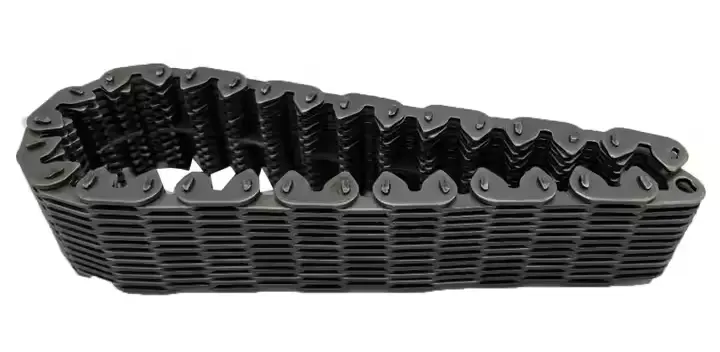
Inverted Tooth Chain Applications
Inverted tooth chains are widely used in various industrial applications, including machine tools, printing presses, and packaging machines. They are known for their high load capacity, smooth operation, and low noise.
Machine Tools
Inverted tooth chains are widely used in machine tools, including CNC machines, lathes, and milling machines. They provide a smooth and accurate motion, ensuring high precision and repeatability.
Printing Presses
Inverted tooth chains are also used in printing presses, where they provide a smooth and quiet operation, ensuring high-quality prints.
Packaging Machines
Inverted tooth chains are widely used in packaging machines, providing a smooth and reliable motion for filling, sealing, and labeling operations.
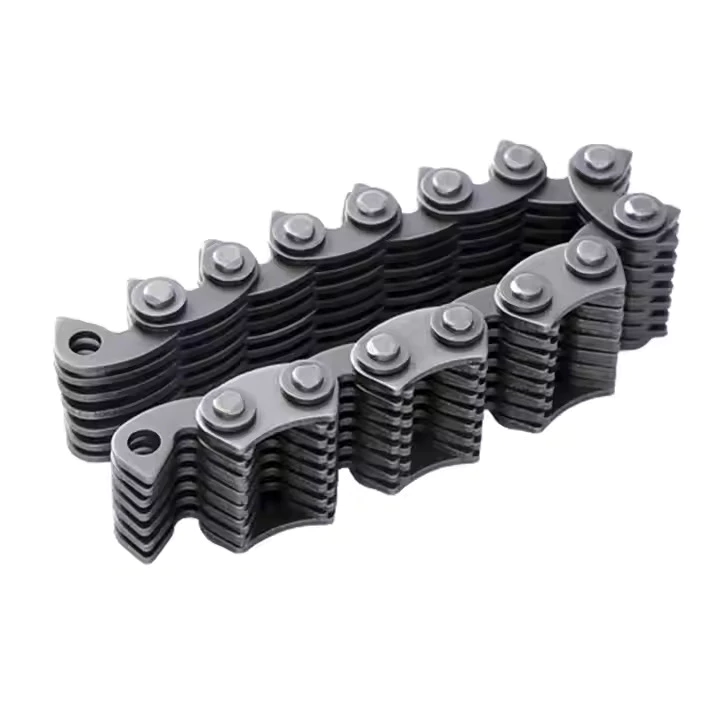
Inverted Tooth Chain Drive
The inverted tooth chain drive is a type of power transmission system that uses an inverted tooth chain and sprockets to transmit power. The chain engages with the sprocket teeth, providing a smooth and quiet operation, as well as a high load capacity.
Sprockets for Silent Chains
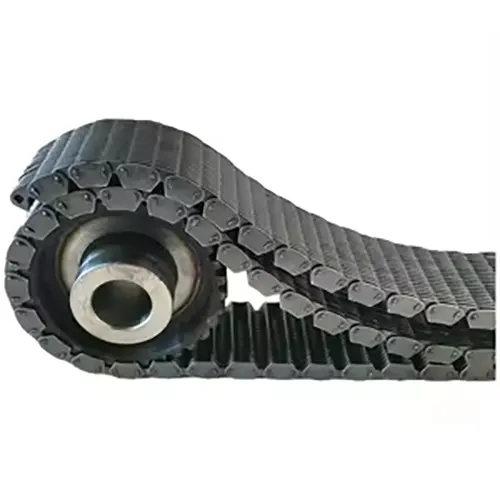
Sprockets are an essential component of the inverted tooth chain drive, providing a smooth and accurate motion. They are designed to match the tooth profile of the chain, ensuring optimal performance and longevity.
Silent chain sprockets and inverted tooth chains are two components that work together to provide a smooth and efficient power transmission system. The sprocket teeth engage with the chain teeth, ensuring a high load capacity and a low noise operation. At RP Techniek BV, we offer a wide range of silent chain sprockets for various industrial applications.
About Us
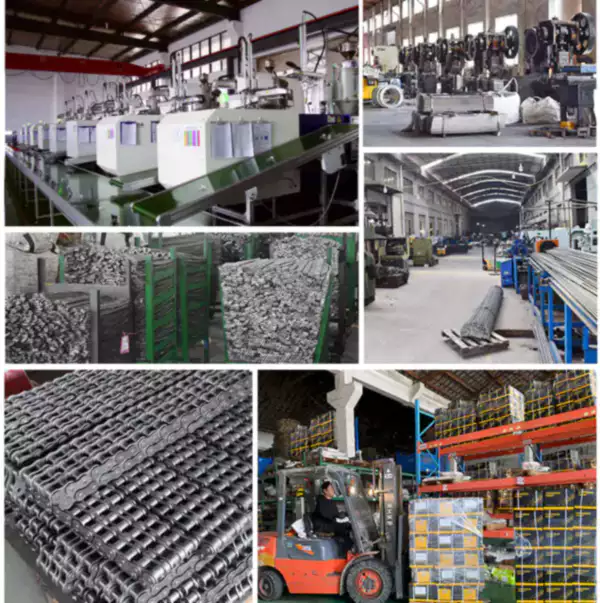
RP Techniek BV is the Dutch sales representative of the Ever-power Group. We specialize in the supply of silent chains and sprockets for the industrial market. Our products are exported to more than 90% of the global market, including the US, Canada, Japan, Korea, Brazil, and Australia. We are committed to providing competitive prices and quality service to our customers.
Q&A
Q1. What is the difference between an inverted tooth chain and a roller chain?
A1. Inverted tooth chains have a tooth profile that engages with the sprocket teeth, providing a smooth and quiet operation, as well as a high load capacity. Roller chains, on the other hand, have a roller that engages with the sprocket teeth, resulting in a higher noise level and lower load capacity.
Q2. How do I determine the chain pitch?
A2. The chain pitch is the distance between the centers of two adjacent teeth. It can be measured using a caliper or a pitch gauge.
Q3. Can inverted tooth chains be used in high-temperature environments?
A3. Inverted tooth chains can be used in high-temperature environments, but it is essential to ensure proper lubrication and to choose a chain material that can withstand the temperature.
Q4. What is the maximum load that an inverted tooth chain can withstand?
A4. The maximum load that an inverted tooth chain can withstand depends on several factors, including the chain pitch, the number of teeth on the sprocket, the chain speed, and the material used to manufacture the chain.
Q5. How often should I lubricate the inverted tooth chain?
A5. The lubrication interval depends on several factors, including the chain speed, the applied load, and the operating environment. As a general rule, the chain should be lubricated at least once a week or as recommended by the manufacturer.
Edited by: Zqq.