
Introduction
Silent chains, also known as inverted tooth chains, are an important component in various drive systems. They play a crucial role in transmitting power efficiently and smoothly. In this article, we will explore the intricate interaction between silent chains and other drive components, shedding light on their significance in the overall performance of a drive system.
1. Silent Chains: An Overview
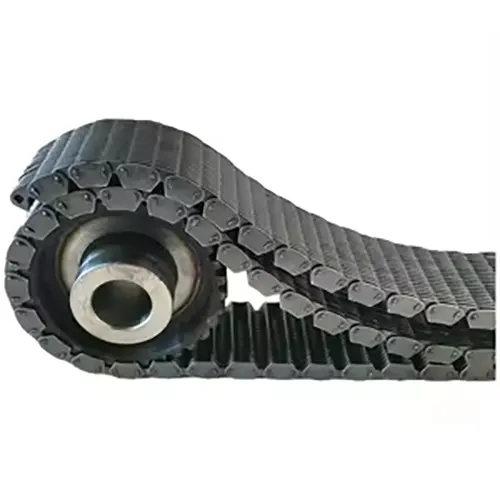
Silent chains, characterized by their inverted tooth design, are widely used in applications requiring high-speed and high-torque transmission. They consist of link plates, pins, and bushings, all meticulously engineered to ensure optimal performance. Silent chains are known for their low noise, excellent durability, and resistance to wear and fatigue.
2. Understanding Silent Chain Dynamics
Silent chains interact with various drive components, each playing a specific role in the overall performance of the system. Let's delve into the key interactions:
2.1 Tensioner Systems: Maintaining Optimal Chain Tension
Tensioner systems, such as hydraulic or spring-loaded tensioners, are crucial in ensuring the silent chain remains properly tensioned. By exerting a controlled force, the tensioner systems compensate for chain elongation and prevent slack, thus minimizing the risk of chain jumping or derailing.
2.2 Sprockets: Enabling Efficient Power Transmission
Sprockets are an integral part of silent chain drive systems, facilitating the transfer of power from the driving shaft to the driven shaft. These toothed wheels engage with the inverted teeth of the silent chain, creating a positive drive with minimal backlash. Proper sprocket design is essential to maximize efficiency and reduce wear on the chain.
2.3 Lubrication: Ensuring Smooth Operation
Lubrication is vital for the silent chain's longevity and smooth operation. Adequate lubrication reduces friction and wear between the chain and other components, such as sprockets and guides. It also helps dissipate heat generated during operation, further enhancing the chain's performance and reliability.
2.4 Guides and Tensioning Rails: Maintaining Chain Alignment
Guides and tensioning rails guide the silent chain along its path, ensuring proper alignment and preventing lateral movements. They minimize the risk of chain vibration, noise, and premature wear, contributing to the overall efficiency and longevity of the drive system.
3. Sprockets for Silent Chains
Silent chain sprockets play a crucial role in the smooth operation and efficient power transmission of a drive system. They are specifically designed to engage with the inverted tooth profile of silent chains, ensuring a positive drive with minimal backlash. The precise tooth geometry of the sprockets ensures optimal contact and reduces wear on the chain.
The relationship between silent chain sprockets and inverted tooth chains is symbiotic. The sprockets provide the necessary engagement points for the chain, enabling efficient power transmission and minimizing the risk of chain slippage. In turn, the silent chains deliver the required torque and speed to drive the system, relying on the accurately designed sprockets for smooth operation.
At our company, we understand the importance of silent chain sprockets in drive systems. We pride ourselves on offering a wide range of high-quality silent chain sprockets that are meticulously engineered for optimal performance. Our silent chain sprockets are crafted with precision to ensure compatibility and durability with inverted tooth chains.
About Us
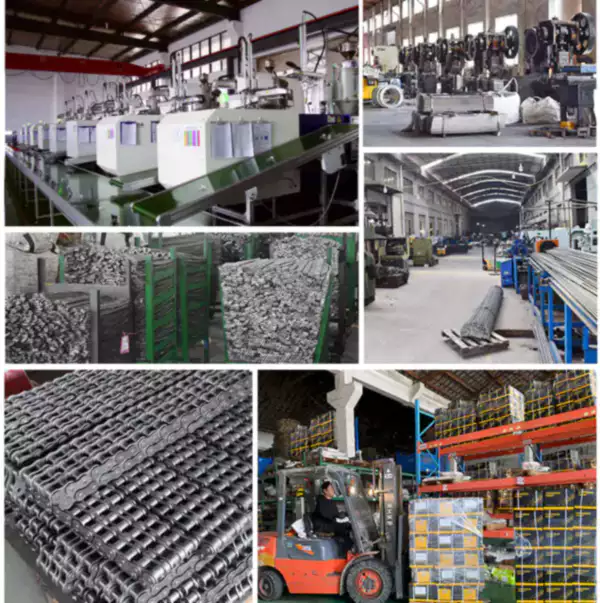
RP Techniek BV, a sales agent of Ever-power Group in the Netherlands, is a leading supplier of silent chains. Our products have gained recognition in the global market due to their superior quality and performance. With over 90% of our products exported to markets such as the United States, Canada, Japan, South Korea, Brazil, and Australia, we are committed to providing competitive prices and excellent service to our customers.
Q&A
Q: Can silent chains be used in high-torque applications?
A: Absolutely! Silent chains are designed to handle high-torque transmission, making them suitable for a wide range of applications.
Q: How often should silent chains be lubricated?
A: Proper lubrication intervals vary depending on the specific application and operating conditions. Regular inspection and adherence to manufacturer recommendations are crucial.
Q: Are silent chains resistant to fatigue failure?
A: Yes, silent chains are engineered to withstand fatigue, ensuring long-lasting performance even under demanding operational conditions.
Q: Can silent chains be used in environments with high temperatures?
A: Yes, silent chains are designed to operate in a wide temperature range, including high-temperature environments, with the proper lubrication and material selection.
Q: Can silent chains be retrofitted to replace other types of chains?
A: Silent chains can be retrofitted in certain cases, but it is essential to consider factors such as compatibility, sprocket design, and system requirements.
Edited by: Zqq.