
Silent chains and roller chains are two of the most commonly used types of chains in power transmission applications. Both chains have their own advantages and disadvantages, and the choice between them will depend on the specific application requirements. In this article, we will compare silent chains and roller chains in terms of their performance, and help you choose the right chain for your application.
Silent Chains: An Overview
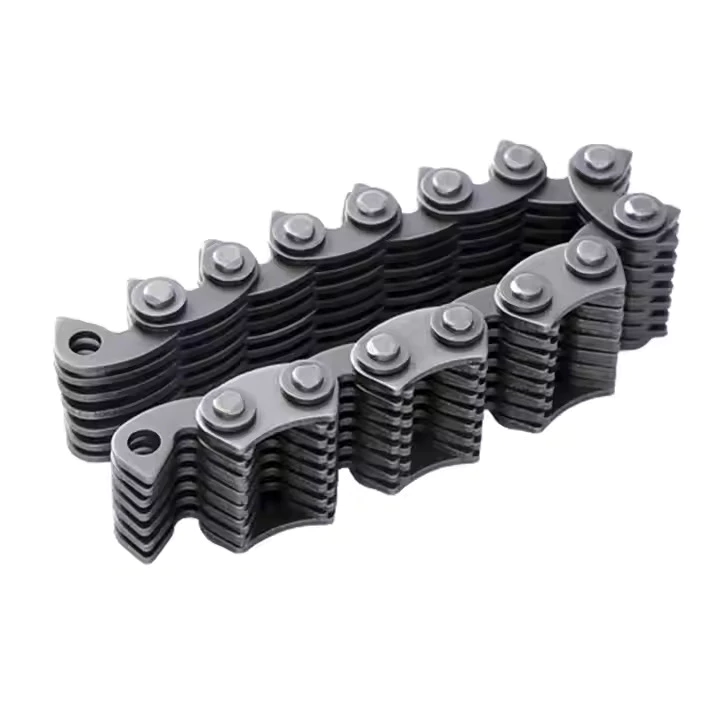
Silent chains, also known as inverted-tooth chains, are designed to provide smooth, quiet, and efficient power transmission. Unlike roller chains, which use rollers to engage with the sprocket teeth, silent chains use specially designed teeth that interlock with the chain links. This design eliminates the need for rollers, reducing friction and increasing efficiency.
Advantages of Silent Chains
- Quiet operation, making them suitable for noise-sensitive applications
- High efficiency, due to the absence of rollers
- High power transmission capacity, due to their strong links
- Long service life, due to the use of high-quality materials and advanced manufacturing techniques
Disadvantages of Silent Chains
- Higher cost than roller chains
- Higher complexity, due to their unique design
- Not suitable for high-speed applications
- Less tolerant of misalignment and shock loads compared to roller chains
Roller Chains: An Overview
Roller chains, also known as bush chains or transmission chains, are the most widely used type of chain in power transmission applications. They consist of a series of inner and outer links connected by pins, with rollers that help engage with the sprocket teeth. Roller chains are available in a wide range of sizes and configurations, making them suitable for a variety of applications.
Advantages of Roller Chains
- Wide availability and low cost compared to other types of chains
- Easy to install and maintain
- Good performance at high speeds and under shock loads
- Tolerant of misalignment and small sprocket diameters
Disadvantages of Roller Chains
- Noisy operation, making them unsuitable for noise-sensitive applications
- Less efficient than silent chains, due to the use of rollers
- Lower power transmission capacity compared to silent chains
- Shorter service life compared to silent chains

Comparing Silent Chains and Roller Chains
When it comes to selecting the right chain for your application, it is important to consider the specific requirements of your application. Here are some key factors to consider when comparing silent chains and roller chains:
| Factor | Silent Chains | Roller Chains |
|---|---|---|
| Noise | Quiet | Noisy |
| Efficiency | High | Low |
| Power transmission capacity | High | Low |
| Service life | Long | Short |
| Cost | High | Low |
| Complexity | High | Low |
| Speed | Low to medium | High |
| Misalignment tolerance | Low | High |
| Shock load tolerance | Low | High |
As you can see, each type of chain has its own set of advantages and disadvantages. Silent chains are ideal for applications that require quiet operation, high efficiency, and high power transmission capacity. Roller chains are more suitable for applications that require low cost, ease of installation and maintenance, high speed, and tolerance of misalignment and shock loads.
Sprockets for Silent Chains
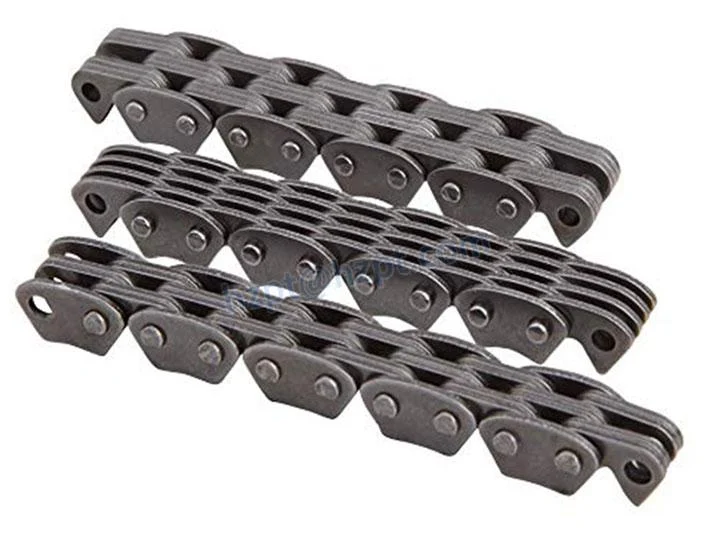
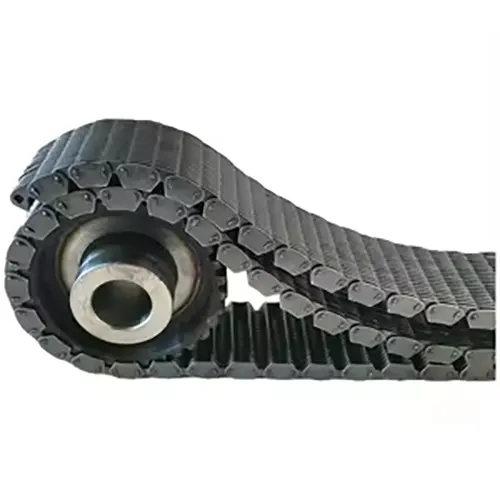
Silent chains and sprockets are designed to work together to provide smooth, efficient power transmission. Silent chain sprockets have specially designed teeth that interlock with the chain links, providing a secure and reliable connection. The sprockets are available in a variety of sizes and configurations, making them suitable for a wide range of applications.
Inverted tooth chains and sprockets are complementary products that work together to provide reliable power transmission. The unique design of the silent chain ensures quiet operation, while the sprockets provide a secure and efficient connection between the chain and the driven component. Together, silent chains and sprockets offer a high-performance and reliable power transmission solution for a variety of applications.
About Us
RP Techniek BV is the Dutch sales agent of the Ever-power Group. We are a leading supplier of silent chains and other power transmission products. Our products are exported to more than 90% of the markets in the USA, Canada, Japan, South Korea, Brazil, and Australia. We are committed to providing competitive prices and high-quality services to our customers.
Q&A
Q1: Can silent chains be used for high-speed applications?
A1: Silent chains are less suitable for high-speed applications due to their unique design, which makes them more complex and less tolerant of misalignment and shock loads compared to roller chains. However, some manufacturers offer high-speed silent chains that are designed to operate at speeds of up to 10,000 RPM.
Q2: Are silent chains more expensive than roller chains?
A2: Yes, silent chains are generally more expensive than roller chains due to their unique design, which requires more advanced manufacturing techniques and high-quality materials. However, the higher cost is often offset by their longer service life and higher efficiency.
Q3: Can roller chains be used in noise-sensitive applications?
A3: No, roller chains are generally unsuitable for noise-sensitive applications due to their noisy operation. Silent chains are a better choice for such applications, as they offer quiet and smooth operation.
Q4: Are silent chain sprockets interchangeable between different brands of silent chains?
A4: No, silent chain sprockets are designed to work with specific brands and types of silent chains. Using a sprocket that is not compatible with the chain can result in poor performance and premature wear.
Q5: Can roller chains be used in high-torque applications?
A5: Yes, roller chains are capable of transmitting high torque loads, but they may require larger sprockets than silent chains due to their lower power transmission capacity.
Edited by: Zqq.