
Inverted tooth silent chains are a type of chain with teeth that fit into the gaps of the links. They are designed to reduce noise and vibration in power transmission systems. There are several manufacturing techniques used to make inverted tooth silent chains. In this article, we will discuss the most common techniques in detail.
1. Cold Extrusion
Cold extrusion is a popular manufacturing technique for making inverted tooth silent chains. In this process, a metal blank is placed into a die set and compressed under high pressure to create the shape of the chain. The process is performed at room temperature, which makes it ideal for creating chains with high precision and dimensional accuracy. Cold extrusion is often used for creating small to medium-sized chains.
2. Hot Extrusion
Hot extrusion is another manufacturing technique used for making inverted tooth silent chains. In this process, the metal blank is heated to a high temperature and then compressed under high pressure to create the shape of the chain. The process is performed at high temperature, which makes it suitable for creating chains with complex shapes and sizes. Hot extrusion is often used for creating large-sized chains.
3. Machining
Machining is a traditional manufacturing technique for making inverted tooth silent chains. In this process, the chain is cut and shaped by removing material from a metal blank using various machining tools such as drills, milling machines, and lathes. Machining is often used for creating customized chains with unique shapes and sizes.
4. Injection Molding
Injection molding is a relatively new manufacturing technique used for making inverted tooth silent chains. In this process, the molten metal is injected into a mold cavity under high pressure to create the shape of the chain. The process is performed at high temperature, which makes it suitable for creating chains with precise dimensions and complex shapes. Injection molding is often used for creating small to medium-sized chains.
5. Powder Metallurgy
Powder metallurgy is another manufacturing technique used for making inverted tooth silent chains. In this process, metal powder is compressed under high pressure to create the shape of the chain. The compressed powder is then heated to a high temperature to fuse the particles together. Powder metallurgy is often used for creating customized chains with unique shapes and sizes.
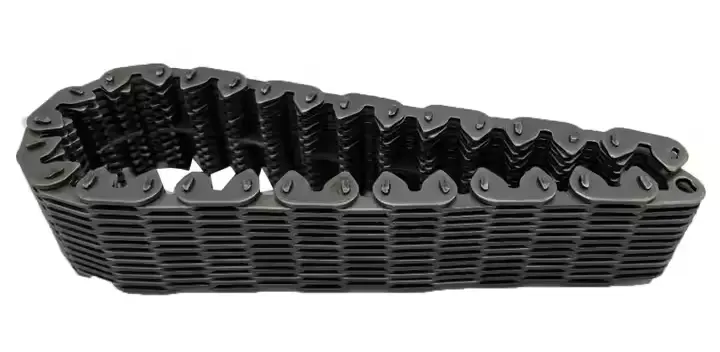
As you can see, there are several manufacturing techniques used to make inverted tooth silent chains. Each technique has its advantages and disadvantages. The choice of manufacturing technique depends on the size, shape, and complexity of the chain.
Sprockets for Silent Chains
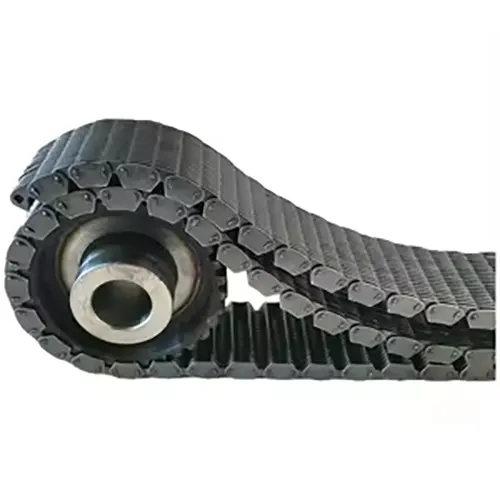
Inverted tooth silent chains and sprockets go hand in hand. The sprocket is the rotating component that engages with the chain, transmitting power from the driver to the driven shaft. The design of the sprocket must be compatible with the chain to ensure smooth and efficient power transmission.
At RP Techniek BV, we understand the importance of matching sprockets with silent chains. That's why we offer a wide range of silent chain sprockets that are specifically designed to work with inverted tooth chains. Our sprockets are made from high-quality materials and are engineered to provide long-lasting performance.
About Us
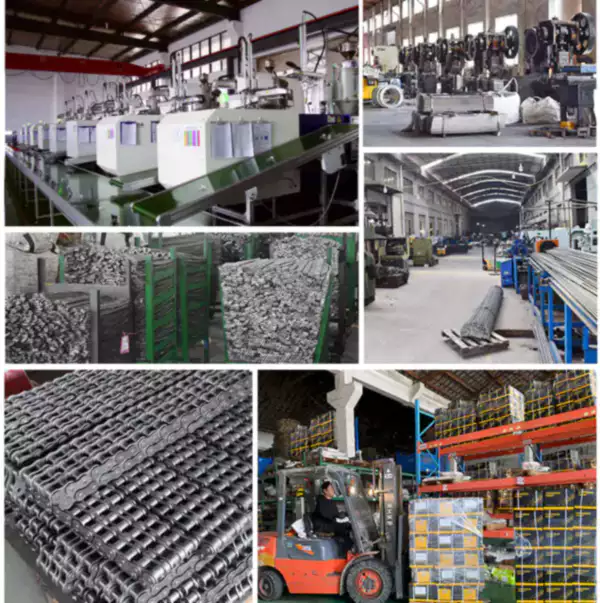
RP Techniek BV is the official sales agent of Ever-power Group in the Netherlands. We specialize in the supply of silent chains and sprockets for power transmission systems. Our products are exported to markets worldwide, including the USA, Canada, Japan, Korea, Brazil, and Australia. We are committed to providing competitive prices and high-quality service to our customers.
Q&A
1. What are the benefits of using inverted tooth silent chains?
Inverted tooth silent chains offer reduced noise and vibration in power transmission systems. They also provide high precision and dimensional accuracy.
2. What is the difference between cold extrusion and hot extrusion?
Cold extrusion is performed at room temperature, while hot extrusion is performed at high temperature. Hot extrusion is suitable for creating large-sized chains with complex shapes and sizes, while cold extrusion is ideal for creating small to medium-sized chains with high precision and dimensional accuracy.
3. What is injection molding?
Injection molding is a manufacturing technique where molten metal is injected into a mold cavity under high pressure to create the shape of the chain.
4. What is powder metallurgy?
Powder metallurgy is a manufacturing technique where metal powder is compressed under high pressure to create the shape of the chain. The compressed powder is then heated to fuse the particles together.
5. What is the importance of matching sprockets with silent chains?
Matching sprockets with silent chains ensures smooth and efficient power transmission. The design of the sprocket must be compatible with the chain to achieve optimal performance.
Edited by: Zqq.