


UCFL 2-Bolt Flange Bearing Units
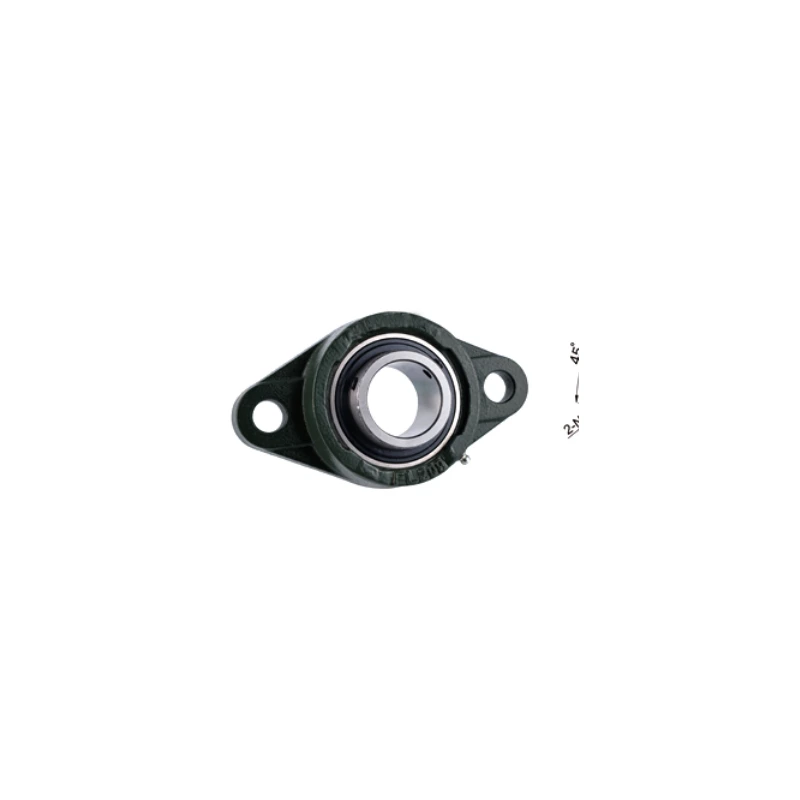
UCFL is a standard duty series configured around 2-bolt flange bearing units. Its catalogue definition uses setscrew locking, with individual bore and dimensional variants retained in one model table.
Series Overview
The page keeps the full series together because housing geometry and locking method define the product family more clearly than a single bore size. Exact unit numbers remain in the source table for side-by-side checking.
The series can also be compared with other mounted-bearing families when the machine design is still open. Start from the bearing index, then return to the drawing that best matches the mounting interface. Browse related bearing families.
Series-Level Selection
UCFL is treated as one catalogue series, with individual unit numbers retained inside the dimensional table.
Mounting Form
The primary configuration is 2-bolt flange bearing units, intended for compact face mounting with a two-bolt flange footprint.
Locking Logic
The catalogue identifies setscrew locking for this series; confirm the exact row before ordering.
Technical Specifications
This summary deliberately avoids copying isolated dimensions out of context. Family attributes are shown here, and the exact model dimensions stay attached to their original unit numbers in the catalogue reference.
| Series | UCFL |
|---|---|
| Catalogue Reference | Part B, page B29 |
| Product Family | 2-Bolt Flange Bearing Units |
| Duty Classification | Standard duty |
| Locking / Mounting Method | Setscrew locking |
| Inner Ring / Bore Form | Wider inner ring / series-specific bore |
| Housing / Configuration | 2-Bolt Flange Bearing Units |
| Material Note | Material varies by unit; confirm selected model |
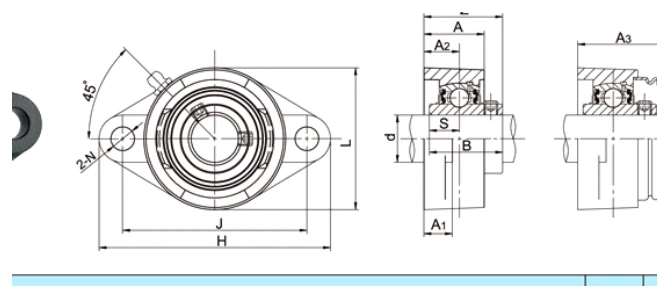
Engineering Drawing
Use the drawing to confirm the mounting envelope before choosing the line item from the catalogue table. Pay particular attention to the shaft centerline, bolt or pilot geometry, overall housing envelope and the dimensions that affect adjacent machine parts.

Applications
Conveyors and small handling systems
For conveyors and small handling systems, this series provides the catalogue mounting form shown above. Confirm load, speed, shaft dimensions and service environment for the chosen model.
Packaging machinery
UCFL is relevant when packaging machinery requires this housing format; verify shaft geometry, mounting interface, operating conditions and environment before final selection.
General industrial frames
For general industrial frames, this series provides the catalogue mounting form shown above. Confirm load, speed, shaft dimensions and service environment for the chosen model.
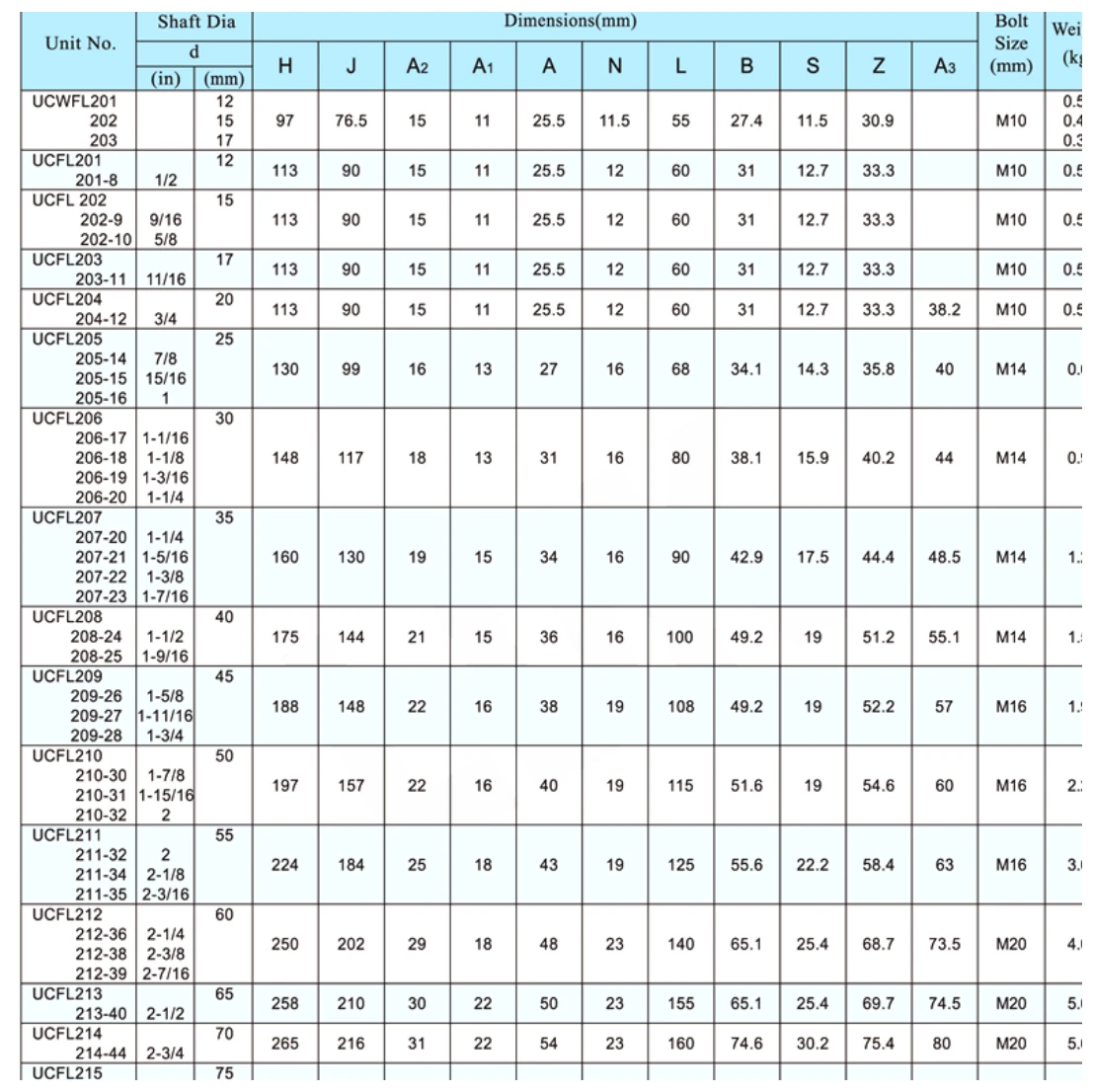
Catalogue Dimensional Data
Below is the full dimensional reference for this series rather than a shortened web transcription. Keeping the table intact reduces the risk of separating a dimension from the wrong bore or unit suffix.
Selection & Integration
A replacement should be checked against measurable interfaces, not appearance alone. Record the shaft size, mounting pattern, centerline or pilot dimensions and the method used to secure the bearing to the shaft. In this family, the intended role is compact face mounting with a two-bolt flange footprint.
| Step | Information To Confirm |
|---|---|
| 1 | shaft diameter |
| 2 | two-bolt spacing |
| 3 | housing orientation |
| 4 | locking method and shaft alignment |
A practical selection review starts with geometry and locking method, then verifies the exact model row. Special coatings, covers, grease, seals or material options should only be treated as included when they are stated for the chosen configuration.
RFQ Support
Confirm The Exact UCFL Configuration
A useful RFQ includes the target model or shaft size, mounting dimensions, quantity and any environment requirement. That gives the quotation review enough information to confirm the catalogue row. Ever Power Netherlands Branch can review the quotation basis against the same reference.
Reference boundary: supplied catalogue page B29 supports the dimensional table and series drawing. Commercial terms and any project-specific requirement are confirmed separately during quotation.