


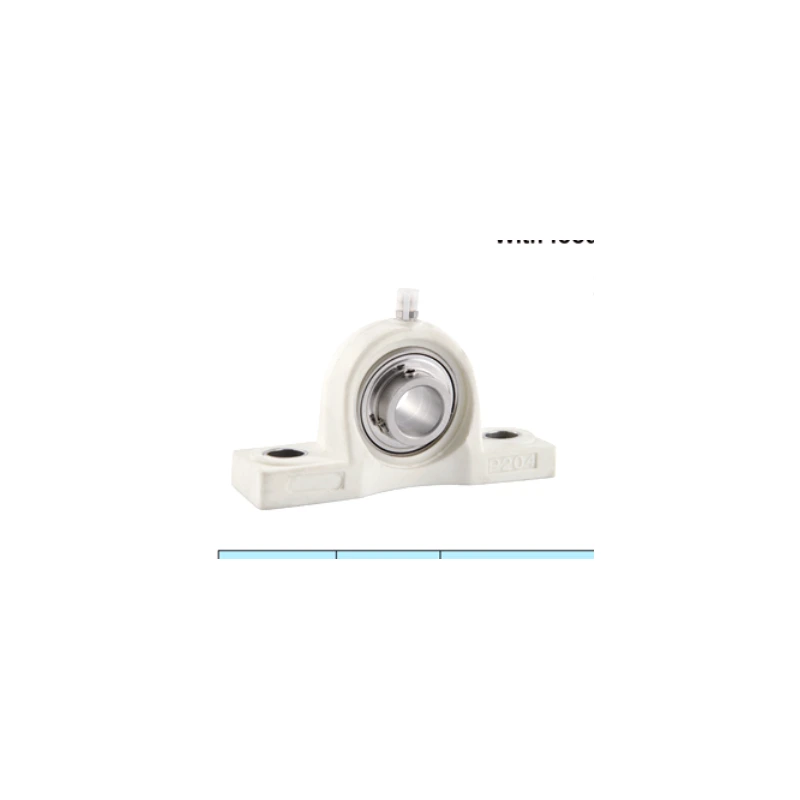
TP-SUCP Thermoplastic Bearing Units
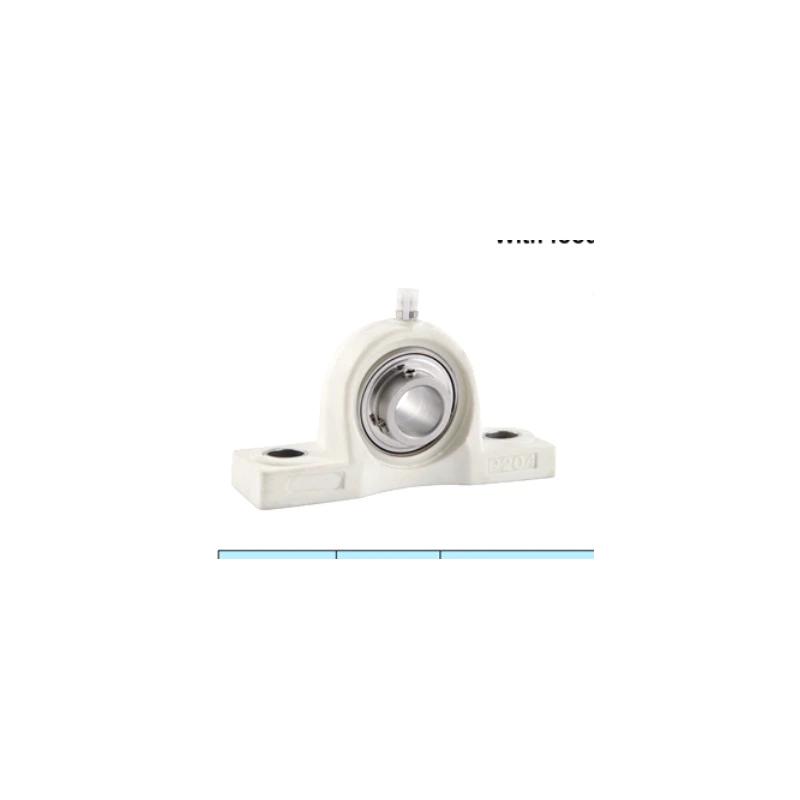
TP-SUCP is a standard duty series configured around thermoplastic solid-base pillow block. Its catalogue definition uses setscrew locking, with individual bore and dimensional variants retained in one model table.
Series Overview
For purchasing and replacement work, the useful decision is the series itself, not a separate web page for every shaft size. The model table therefore stays together so adjacent metric and inch variants can be compared in one place.
Treat the housing format and locking method as the first filter. The broader bearing range is useful when the same shaft size must be checked against another flange, pillow, take-up or insert arrangement. Browse related bearing families.
Series-Level Selection
TP-SUCP is treated as one catalogue series, with individual unit numbers retained inside the dimensional table.
Mounting Form
The primary configuration is thermoplastic solid-base pillow block, intended for corrosion-resistant mounted support using thermoplastic housings.
Environment
Thermoplastic housing; stainless steel insert where stated in catalogue. Confirm the selected insert, seal, grease and cover arrangement for the actual cleaning or corrosion exposure.
Technical Specifications
This summary deliberately avoids copying isolated dimensions out of context. Family attributes are shown here, and the exact model dimensions stay attached to their original unit numbers in the catalogue reference.
| Series | TP-SUCP |
|---|---|
| Catalogue Reference | Part B, page B77 |
| Product Family | Thermoplastic Bearing Units |
| Duty Classification | Standard duty |
| Locking / Mounting Method | Setscrew locking |
| Inner Ring / Bore Form | Wider inner ring / series-specific bore |
| Housing / Configuration | thermoplastic solid-base pillow block |
| Material Note | Thermoplastic housing; stainless steel insert where stated in catalogue |
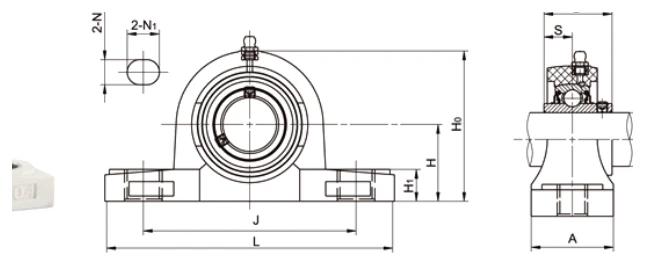
Engineering Drawing
Use the drawing to confirm the mounting envelope before choosing the line item from the catalogue table. Pay particular attention to the shaft centerline, bolt or pilot geometry, overall housing envelope and the dimensions that affect adjacent machine parts.

Applications
Food and beverage handling equipment
For food and beverage handling equipment, this series provides the catalogue mounting form shown above. Confirm load, speed, shaft dimensions and service environment for the chosen model.
Washdown-prone conveyors
TP-SUCP is relevant when washdown-prone conveyors requires this housing format; verify shaft geometry, mounting interface, operating conditions and environment before final selection.
Packaging and processing machinery
For packaging and processing machinery, this series provides the catalogue mounting form shown above. Confirm load, speed, shaft dimensions and service environment for the chosen model.
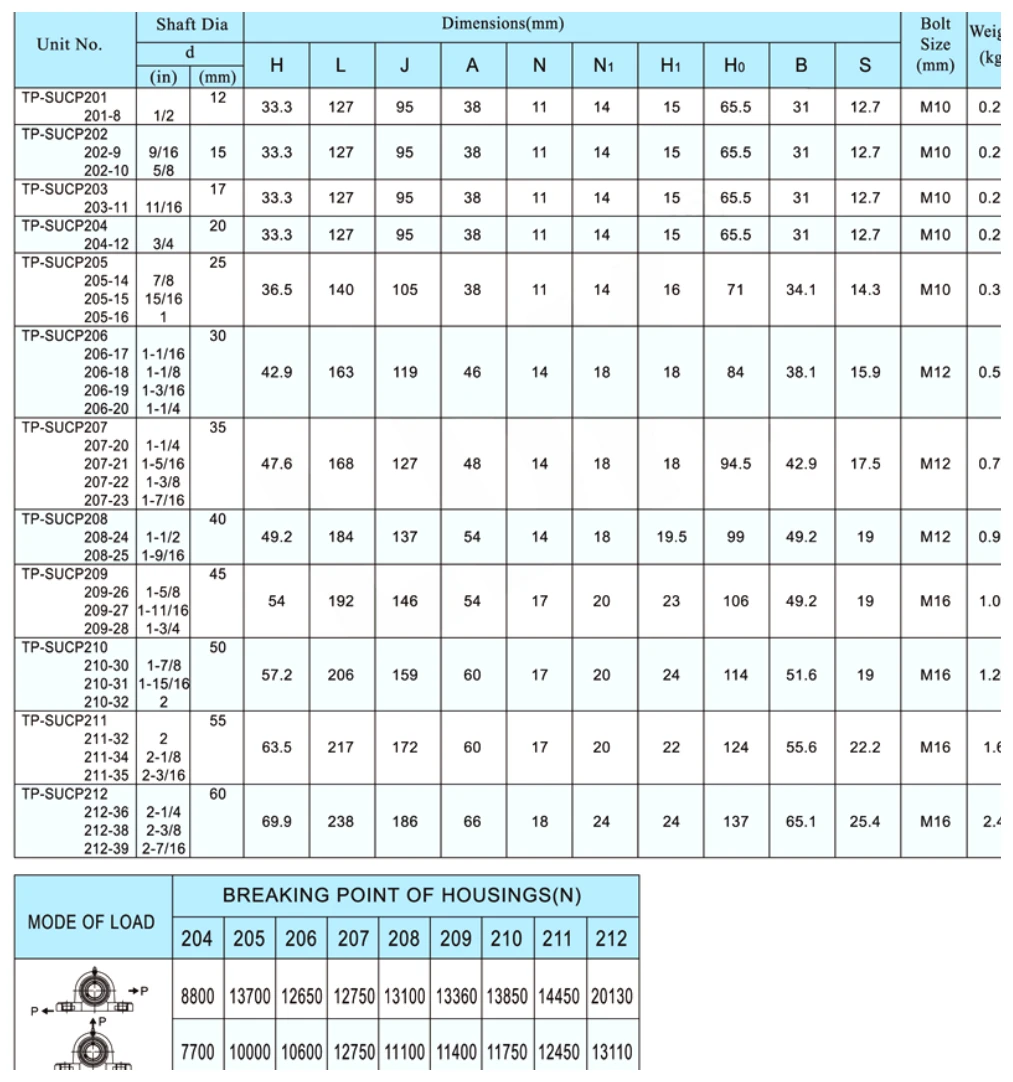
Catalogue Dimensional Data
The original model table is shown at high resolution so metric and inch unit numbers remain attached to the correct drawing-letter dimensions. Select the row visually and confirm it again in the RFQ.
Selection & Integration
A replacement should be checked against measurable interfaces, not appearance alone. Record the shaft size, mounting pattern, centerline or pilot dimensions and the method used to secure the bearing to the shaft. In this family, the intended role is corrosion-resistant mounted support using thermoplastic housings.
| Step | Information To Confirm |
|---|---|
| 1 | shaft diameter |
| 2 | housing footprint |
| 3 | locking method |
| 4 | cleaning environment, cover and grease requirements |
The supplied catalogue is used here as the technical selection reference. Final quotation review should confirm the exact model, shaft size, mounting interface and any environment-specific requirement.
RFQ Support
Confirm The Exact TP-SUCP Configuration
Include the exact bore or unit suffix whenever possible. A photo of the installed housing and a few fixed mounting dimensions are useful when a legacy code is incomplete. Ever Power Netherlands Branch can review the quotation basis against the same reference.