


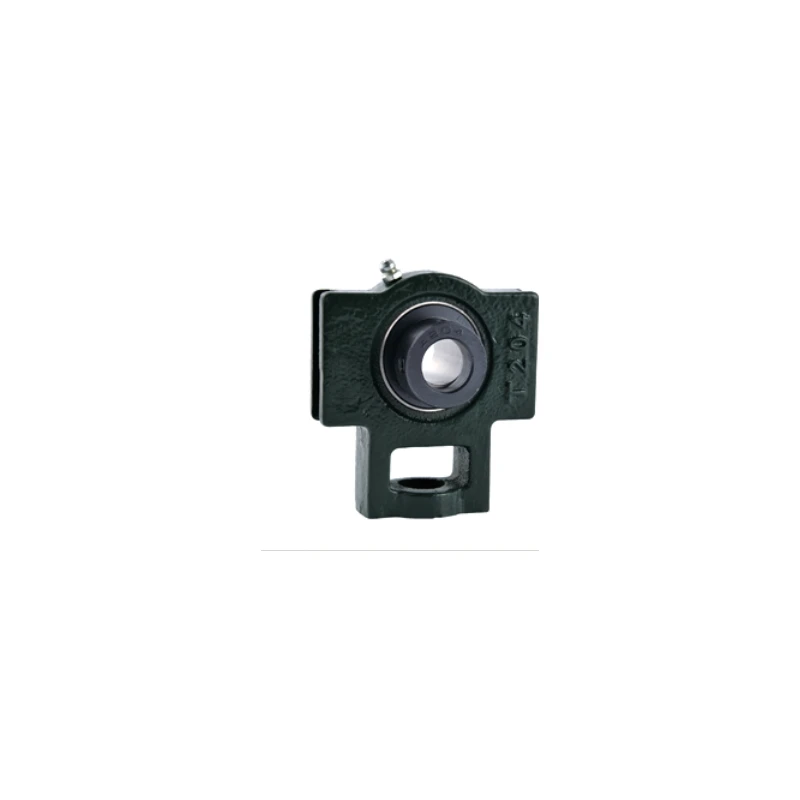
NAT Take-Up Bearing Units
NAT is a standard duty series configured around take-up bearing units. Its catalogue definition uses eccentric locking, with individual bore and dimensional variants retained in one model table.
Series Overview
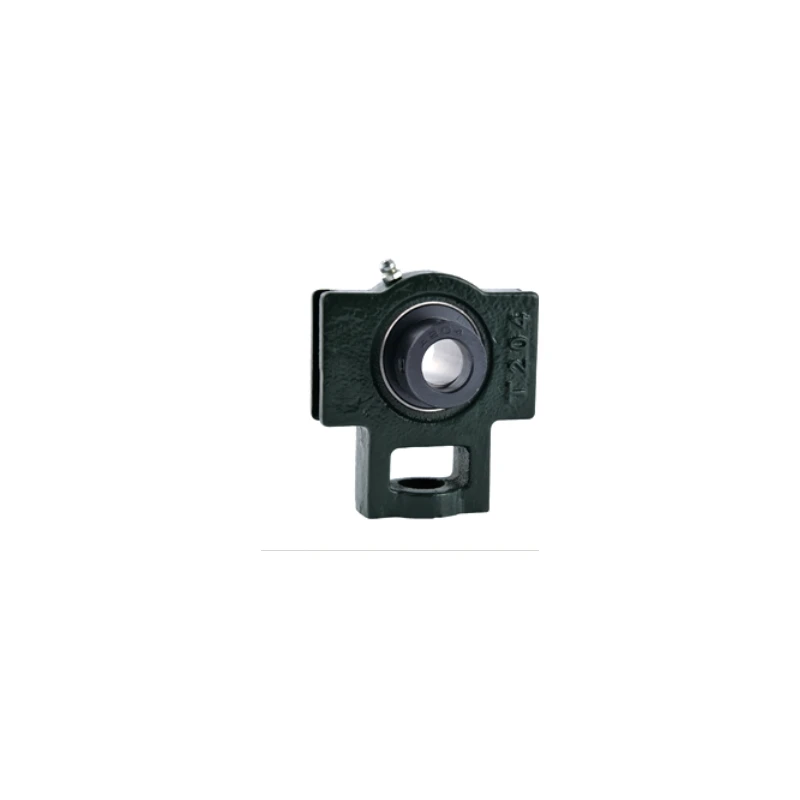
The page keeps the full series together because housing geometry and locking method define the product family more clearly than a single bore size. Exact unit numbers remain in the source table for side-by-side checking.
The series can also be compared with other mounted-bearing families when the machine design is still open. Start from the bearing index, then return to the drawing that best matches the mounting interface. Browse related bearing families.
Series-Level Selection
NAT is treated as one catalogue series, with individual unit numbers retained inside the dimensional table.
Mounting Form
The primary configuration is take-up bearing units, intended for guided shaft support used where position adjustment or belt/chain tensioning is required.
Locking Logic
The catalogue identifies eccentric locking for this series; confirm the exact row before ordering.
Technical Specifications
Series attributes are separated from model dimensions here. This makes the page easier to scan while keeping the original line-by-line dimensional reference intact below.
| Series | NAT |
|---|---|
| Catalogue Reference | Part B, page B44 |
| Product Family | Take-Up Bearing Units |
| Duty Classification | Standard duty |
| Locking / Mounting Method | Eccentric locking |
| Inner Ring / Bore Form | Wider inner ring / series-specific bore |
| Housing / Configuration | Take-Up Bearing Units |
| Material Note | Material varies by unit; confirm selected model |
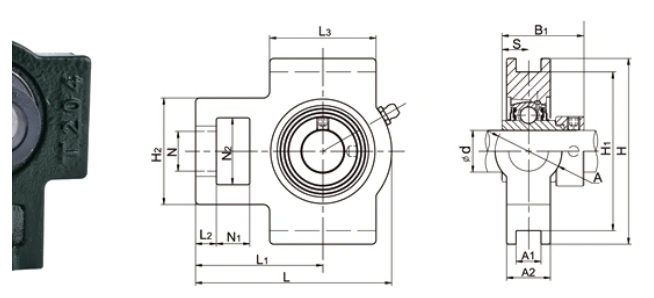
Engineering Drawing
For replacement work, compare the drawing with the installed housing rather than relying on a familiar series code alone. Mounting dimensions and locking details are the better confirmation points.

Applications
Belt conveyor take-up positions
NAT is relevant when belt conveyor take-up positions requires this housing format; verify shaft geometry, mounting interface, operating conditions and environment before final selection.
Bucket elevator or chain tensioning points
For bucket elevator or chain tensioning points, this series provides the catalogue mounting form shown above. Confirm load, speed, shaft dimensions and service environment for the chosen model.
Adjustable material-handling frames
NAT is relevant when adjustable material-handling frames requires this housing format; verify shaft geometry, mounting interface, operating conditions and environment before final selection.
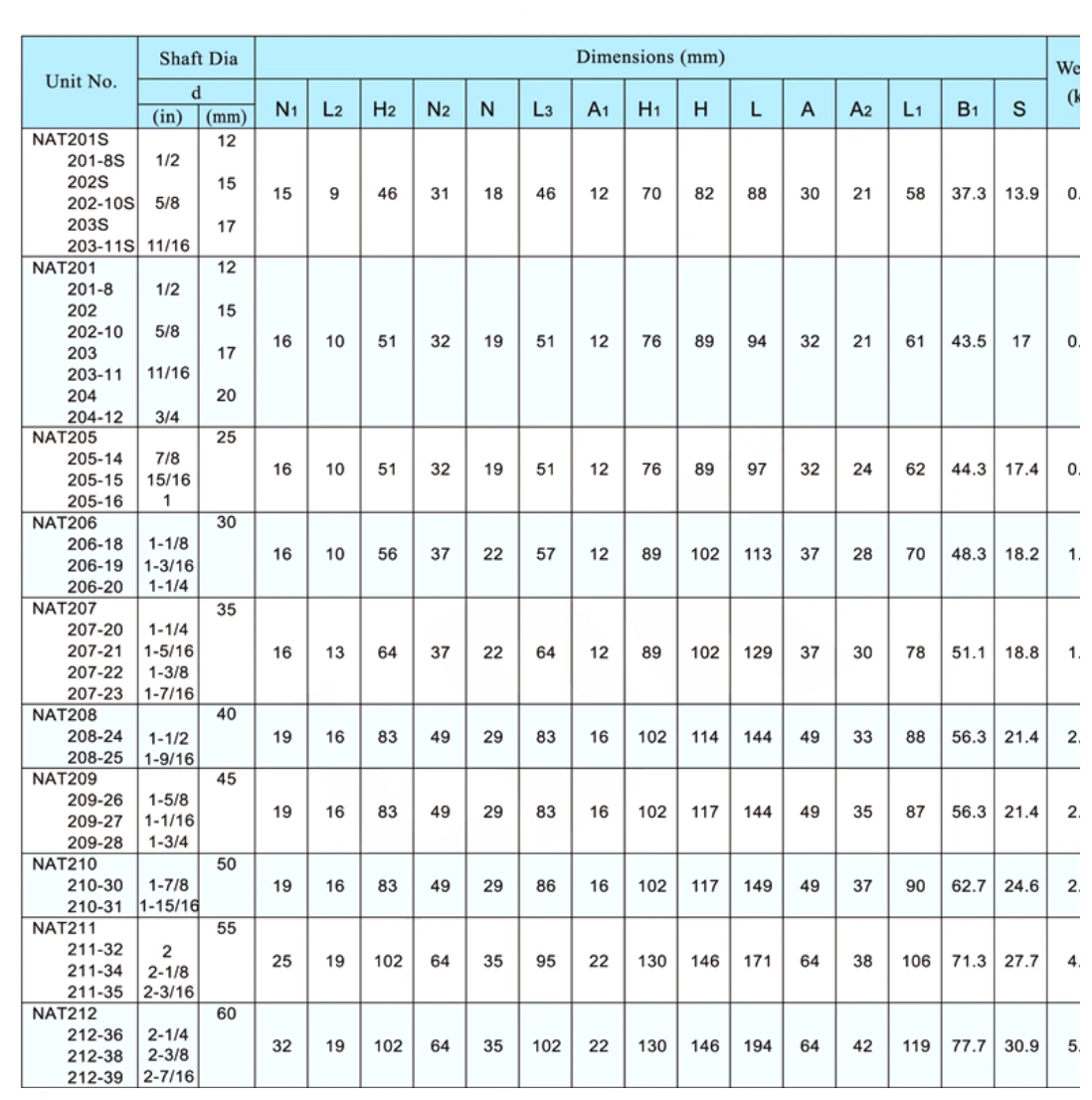
Catalogue Dimensional Data
Use this catalogue table for the final unit-number check. It preserves the source row order, dimensional columns and metric/inch alternatives on one reference image.
Selection & Integration
Use the machine frame as the selection constraint. Confirm the fixed mounting dimensions and shaft first, then choose the series variant whose locking and housing form fit those conditions. In this family, the intended role is guided shaft support used where position adjustment or belt/chain tensioning is required.
| Step | Information To Confirm |
|---|---|
| 1 | shaft diameter |
| 2 | take-up slot or guide geometry |
| 3 | required adjustment/travel position |
| 4 | locking method and lubrication access |
Before quotation, confirm the source row that matches the required shaft and housing dimensions. Any option not stated for that row should be treated as an RFQ item rather than assumed as standard.
RFQ Support
Confirm The Exact NAT Configuration
Attach the machine or housing drawing with the required quantity and shaft size. This gives the technical review a clear basis for matching the catalogue row without guessing from the series name alone. Ever Power Netherlands Branch can review the quotation basis against the same reference.